

A pressure washer may remove dirt from glass, but the pane is only one part of a window. Concentrated water can also reach glazing, gaskets, weatherstripping, screens, caulk, frame joints, and drainage channels.
So, can you pressure wash windows safely? Unless the window manufacturer expressly approves the method for that product, the safest answer is no. Clean the window separately with the gentlest method allowed in its care guide.
Do Not Aim a Pressure Washer Directly at a Window
Several major window manufacturers advise against direct pressure washing. Marvin’s care instructions, for example, say never to use a pressure washer directly on any part of a window or door. Andersen similarly warns that pressurized cleaning tools may damage its units.
This does not mean every window will crack the moment spray touches it. It means there is no reliable way to declare an unknown window safe based only on the pressure washer’s setting.
Glass condition, glazing, frame construction, window age, caulk, seals, nozzle pattern, distance, water volume, and spray direction all affect the outcome. An intact modern window and an older unit with loose glazing do not present the same risk.
The Pane Is Only One Part of the Risk
Windows are assemblies, not just flat sheets of glass. A spray that leaves the pane intact can still affect surrounding components.
| Window component | What direct pressure can do |
| Glass and glazing | Stress-damage glass, disturb glazing materials, or worsen an existing crack |
| Gaskets and weatherstripping | Dislodge or damage flexible parts that help control air and water |
| Perimeter caulk and frame joints | Force water through gaps or damage deteriorated sealant |
| Insect screens | Stretch mesh, bend the frame, tear material, or push the screen from its track |
| Sill and drainage paths | Overwhelm vulnerable joints or contribute to pooling when weep holes are blocked |
| Frame finish and hardware | Damage coatings or carry dirt into tracks and moving parts |
The Fenestration and Glazing Industry Alliance warns that high-pressure spraying can dislodge seals and gaskets, damage frame components, and force water into a home.
That is also why water behind the frame can be harder to detect than dirty glass. Moisture may cross an operable joint, deteriorated caulk line, or opening between the window and wall without leaving an obvious mark on the pane.
Why a Low Setting Is Not a Universal Solution
Many instructions on how to pressure wash windows begin with a PSI, nozzle angle, or minimum distance. Those numbers can create false confidence.
Pressure at the surface depends on more than the machine’s dial. Nozzle shape, flow, distance, angle, movement, and the window’s condition all matter. More importantly, a pressure washer manual describes the machine. It does not establish what a particular window manufacturer allows.
A wider nozzle or greater distance may reduce force, but it cannot certify old caulk, a delicate screen, loose glazing, or a concealed frame joint. A pressure washer setting is not a compatibility approval.
That is why a reliable explanation of how to wash windows with a power washer cannot offer one setting for every house. The window maker’s current care instructions should control.
Protect Windows When Cleaning Nearby Siding
Cleaning siding near a window is different from using the window as a pressure-washing target. Window cleaning and pressure washing are adjacent jobs, not interchangeable ones.
Before exterior washing begins:
- Identify the window manufacturer when possible and review its care instructions.
- Look for cracked glass, loose glazing, damaged weatherstripping, open caulk joints, torn screens, and blocked drainage openings.
- Close and lock operable windows. This helps them perform as designed, but it does not make them pressure-washer safe.
- Remove screens when their manufacturer recommends separate cleaning.
- Keep the direct spray away from glass, screens, frame edges, joints, and perimeter caulk.
- Do not direct water upward beneath trim or into overlapping materials around the opening.
- Clean and inspect the windows separately after the surrounding wall is finished.
A visual inspection cannot prove that a window is watertight. If the unit is deteriorated, unusually old, already fogged between panes, or missing sealant, stop and have the window evaluated before washing around it.
Use a Separate Cleaning Method for Glass and Screens
The safer approach is to treat each component according to its manufacturer’s instructions.
Clean the Glass and Frame Gently
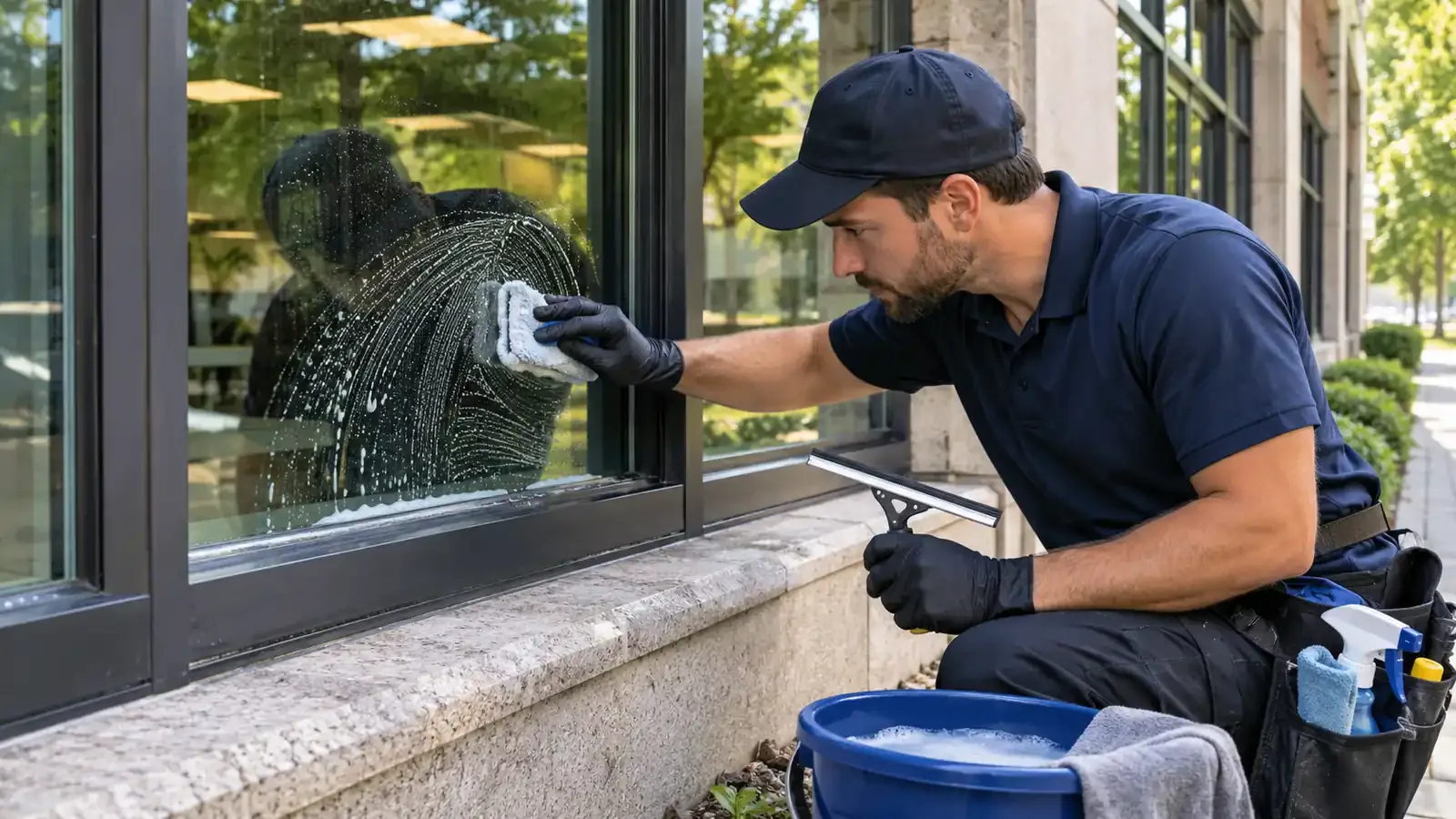
For many windows, the approved method involves clean water, a mild or specifically approved cleaner, a soft nonabrasive applicator, and a squeegee or soft cloth. Andersen’s cleaning guidance lists power washers among the tools that can damage glass or frames.
Avoid assuming that a cleaner suitable for glass is also safe for painted wood, vinyl, fiberglass, aluminum, weatherstripping, or specialty coatings. Check the care guide before applying it across the entire assembly.
For a purpose-built alternative to direct pressure, our professional window cleaning service handles exterior glass separately from general surface washing.
Remove and Support Screens
Screens should usually be removed and supported on a clean, flat surface. Use mild soap, a soft brush, and a gentle rinse when the product instructions permit it. Let the screen dry before reinstalling it.
Pella’s owner guidance specifically says not to power-wash several types of conventional, high-transparency, and retractable screens.
Check More Than the Glass After Accidental Exposure
If a window was accidentally pressure washed, stop directing water at it and inspect both sides promptly.
Look for:
- Water on the interior sill, wall, or trim
- A displaced screen or stretched mesh
- Loose caulk, glazing, or weatherstripping
- Water collecting in tracks without draining
- New difficulty opening, closing, or locking the window
- Moisture or fogging between insulated panes
These signs do not all mean the same thing. Water on the room-side sill may point to water crossing an operable joint or frame path. Fog between panes can indicate an insulated-glass seal failure, but its appearance after washing does not by itself prove the washing caused the failure. A window manufacturer, installer, or qualified glass professional may need to determine the appropriate repair.
The Practical Decision Rule
Do not ask only whether the glass can withstand the spray. Ask whether the entire window assembly, including its seals, screen, frame, finish, caulk, and drainage system, is approved for that cleaning method.
If the manufacturer does not expressly permit direct pressure washing, keep the pressure washer off the window. Clean nearby siding carefully, then use a separate, manufacturer-approved method for the glass and screen. That avoids turning a simple cleaning job into a leak, damaged screen, or window repair.
Frequently Asked Questions
Can you power wash windows on a low-pressure setting?
A low setting reduces force but does not establish that the method is safe for a particular window. Manufacturer restrictions, window condition, nozzle, flow, distance, and spray direction still matter. If the care guide prohibits pressure washing, a lower setting does not override that instruction.
Can a pressure washer break a window seal?
It can damage or dislodge certain seals, gaskets, glazing materials, and frame components. The risk depends on the window design and its condition. Avoid claiming that every fogged pane after washing was caused by the washer, since insulated-glass seals can fail for other reasons.
Can you pressure wash window screens?
Do not direct a pressure washer at insect screens. The spray can stretch or tear the mesh, bend the frame, or push the screen out of its track. Remove and clean screens gently according to the manufacturer’s instructions.
Is it safe to pressure wash siding around windows?
Siding may be washable while the nearby window remains off-limits. Keep direct spray away from the window, screen, frame edges, joints, and perimeter sealant. Follow the care instructions for both the siding and the window.
Will closing and locking a window keep pressure-washing water out?
Closing and locking helps the window perform as designed under normal conditions, but it does not make the unit a pressure-rated cleaning target. Concentrated spray can still reach vulnerable joints, caulk, glazing, and drainage paths.
What is the safest way to clean exterior windows?
Use the method specified by the window manufacturer. Common recommendations include an approved mild cleaner, soft nonabrasive applicator, gentle water flow, and a squeegee or soft cloth. Specialty coatings and frame materials may require different products.
What should I do if water came inside after pressure washing?
Stop spraying the area, dry visible moisture, document where the water appeared, and check the sill, trim, weatherstripping, caulk, and drainage openings. If moisture may have entered behind the trim or wall, arrange a qualified inspection rather than assuming the surface has dried completely.
Is soft washing safe for windows?
“Soft washing” can describe different equipment, pressures, chemicals, and rinse methods. The label alone does not prove compatibility with a window. Confirm the product-specific care instructions and avoid direct application to components the manufacturer excludes.
