


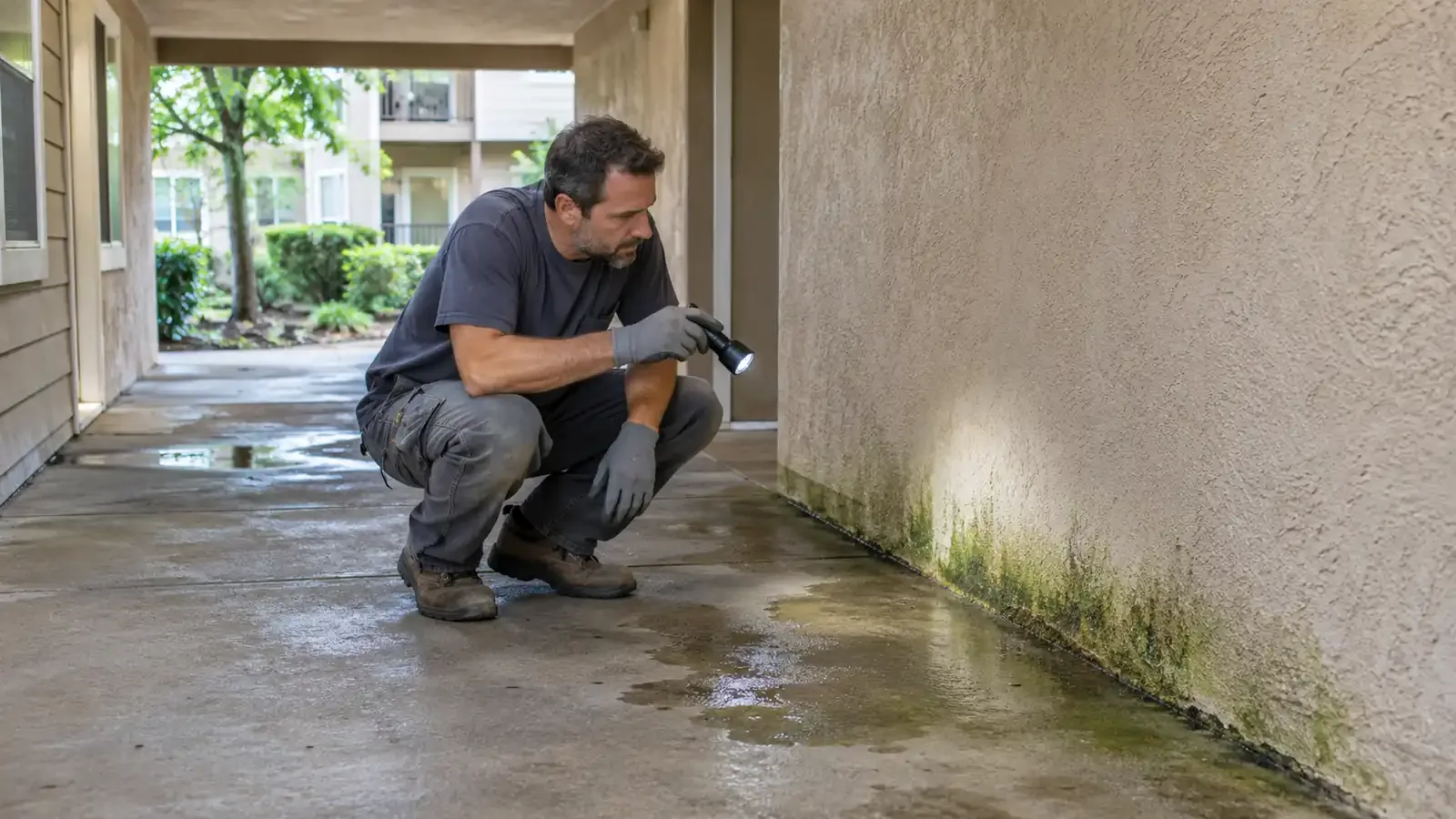
Covered walkways can look protected from the weather and still be the dampest part of an apartment community. A roof blocks some direct rain, but it also blocks sun. Recessed landings, stair undersides, wall bases, and corners may remain wet long after open sidewalks have dried.
When those same areas stay green or smell musty, the problem may not be that the entire breezeway was skipped. The cleaning scope may be treating every square foot alike while missing the small zones that repeatedly collect water or dry slowly. The better approach is to map wetting and drying patterns first, then match cleaning and maintenance to what each zone is doing.
Green and Musty Are Clues, Not a Complete Diagnosis
Color and odor can narrow the investigation, but neither identifies the exact cause from a distance. Green material on a walkway may include algae, moss, or other growth mixed with dirt. A musty odor can point to persistent dampness or hidden growth, but it does not prove which organism is present or where the moisture begins.
The practical first question is not, “What should we call this?” It is, “Why does this exact area stay wet longer than the surfaces around it?” The EPA’s multifamily building guidance tells property teams to inspect interior and exterior moisture conditions, including standing water, drainage, moisture stains, and musty odors. That makes recurring odor or growth a maintenance clue, not merely a cosmetic complaint.
Build a Drying Map Before Setting the Cleaning Scope
A property walk is more useful when it compares the problem area with a nearby surface that dries normally. Check after rain, irrigation, and routine washing instead of relying only on a dry-day inspection.
Mark Where Water Arrives
Trace rain blown into open ends, runoff from roofs and stairs, downspout discharge, irrigation overspray, air-conditioning condensate, and water pushed toward doors or wall bases during cleaning. A covered slab may receive less rain overall while still collecting water at one edge.
Mark Where Water Stalls
Look for shallow low spots, blocked drains, debris at edges, failed joints, and transitions where water has no clear route away. Dark bands at wall bases or around posts can reveal repeated splashback or ponding. In a recurring problem area, the property team may need to evaluate slope, drainage, or nearby building details rather than treating the stain as an isolated cleaning issue.
Mark Where Drying Is Weak
Compare open ends with recessed corners, upper landings with lower ones, and sunny sections with shaded runs. Nearby walls, dense landscaping, solid rail panels, stored items, and stair structures can reduce sun or air movement. University of California guidance notes that algae and moss occur on moist, shady pavement and that redirecting water away from hard surfaces can help reduce the conditions that support growth.
Record What Returns First
After cleaning, photograph the same locations and note which patches darken, smell musty, or turn green first. A repeatable pattern is more useful than a general note that “the breezeway gets dirty.” It helps separate a broad cleaning-frequency issue from one drain, downspout, irrigation head, leak, or sheltered corner that needs separate attention.
Clean the Whole Route, but Prioritize the Persistent Wet Zones
Apartment breezeway cleaning should cover the resident’s full walking route, not only the easy center strip. A useful apartment building exterior cleaning scope should name floors, edges, thresholds, landings, stair treads and risers, wall bases, railings, and undersides where applicable. It should also identify surface materials and coatings, because bare concrete, painted concrete, masonry, metal, and finished walls may not tolerate the same method.
Within that complete scope, the drying map can guide extra attention to:
- Recessed door approaches and dead-end landings.
- Lower stair runs and the space beneath stair structures.
- Joints where floors meet walls, curbs, or posts.
- Areas near drains, downspouts, condensate outlets, or irrigation.
- Corners screened by vegetation, panels, furniture, or stored belongings.
- Sections that remain darker after nearby surfaces have dried.
This approach is different from repeatedly applying more pressure to the greenest patch. The National Park Service explains that biological growth on masonry often returns when moisture and low-light conditions remain. Cleaning can remove the buildup, but force alone does not correct drainage, shade, leakage, or slow evaporation.
Know When Cleaning Is Only One Part of the Work
Apartment exterior cleaning services can address removable buildup. They cannot repair a leak, restore failed drainage, correct a low slab, replace deteriorated sealant, or resolve moisture inside a wall. Route the condition to building maintenance or a qualified building-envelope professional when you find:
- Water that remains pooled well after comparable sections have dried.
- Growth that returns quickly in one sharply defined location.
- Peeling coatings, soft materials, open joints, crumbling mortar, or staining below a penetration.
- Drips from a pipe, condensate line, gutter, roof edge, or upper landing.
- Musty odors paired with indoor staining, resident complaints, or signs of water entry.
- A walkway that cannot be cleaned without directing water toward doors, walls, or an unsuitable drain.
Maryland’s stormwater guidance treats pavement and building wash water as a pollution-prevention concern. A commercial scope should identify drains and the likely flow path before work begins, then use a site- and jurisdiction-appropriate water-handling plan rather than assuming every drain is an acceptable destination.
Set Maintenance by Exposure, Not One Property-Wide Calendar
The sunniest sidewalk and the deepest covered landing may not need service at the same interval. After the initial clean and drying review, group the property into practical maintenance tiers: normal-drying routes, slow-drying routes, and repair-first locations.
Normal-drying areas may fit the broader exterior schedule. Slow-drying areas may need more frequent inspection, debris removal, or targeted cleaning. Repair-first locations should be corrected before repeated washing becomes the default response. When comparing apartment complex pressure washing proposals, property managers can use those zones to confirm whether each bid covers the same areas and follow-up needs.
Track the same photo points after rainfall and after service so the schedule is based on recurrence, not guesswork. Property managers can also use this exposure-based approach to evaluate multifamily exterior cleaning services: the proposal should separate routine routes from locations that need more frequent attention or repair.
If your covered walkways keep turning green, the useful question is not simply whether the property was washed. It is whether the apartment exterior cleaning plan found the surfaces that never get a fair chance to dry. A scope built around those patterns can produce a cleaner route today while giving management better information for the next maintenance decision.
For a property-wide assessment, our apartment complex exterior cleaning service can include breezeways, walkways, stairwells, and related exterior surfaces in a coordinated scope.
Frequently Asked Questions
Why does a covered breezeway grow algae if rain rarely reaches it?
Water can still arrive through wind-driven rain, tracked moisture, runoff from stairs or roofs, irrigation, condensate, and cleaning. A roof may also reduce sunlight, so a small amount of water can remain longer than it would on an open walkway.
Does a musty smell mean there is mold in the breezeway?
Not by itself. A musty odor is a reason to inspect for damp materials, standing water, leakage, and visible growth, but odor alone does not identify the organism or its source. Persistent odor near doors or walls may warrant a broader moisture inspection.
Should every breezeway surface be pressure washed?
No. The method should match the surface and its condition. Durable uncoated concrete may permit controlled pressure cleaning, while painted surfaces, masonry, sealants, siding, and other finishes may need lower pressure or a different process.
Why does the green film return faster in the same corners?
Those corners may receive more water, drain poorly, collect debris, or get less sun and air movement. A return pattern is useful evidence. Record it and check nearby drains, joints, downspouts, irrigation, condensate outlets, and obstructions before simply shortening the cleaning interval.
What should an apartment breezeway cleaning quote include?
It should define the buildings and levels, included surfaces, materials, known stains or damage, cleaning boundaries, resident-access plan, water route, exclusions, and closeout documentation. Floors-only pricing may not include walls, ceilings, stairs, edges, or adjacent entrances.
How soon should residents use a breezeway after cleaning?
Access should follow the site-specific safety plan and the condition of the walking surface, not a universal time estimate. The active area should remain controlled until surfaces are rinsed as required, standing water is removed, and the route is safe to reopen.
Can cleaning solve recurring ponding in a breezeway?
Cleaning can clear removable debris that blocks drainage, but it cannot correct an inadequate slope, damaged drain, failed joint, or building leak. If water repeatedly settles in the same place, the cause should be evaluated as a maintenance or repair issue.
