

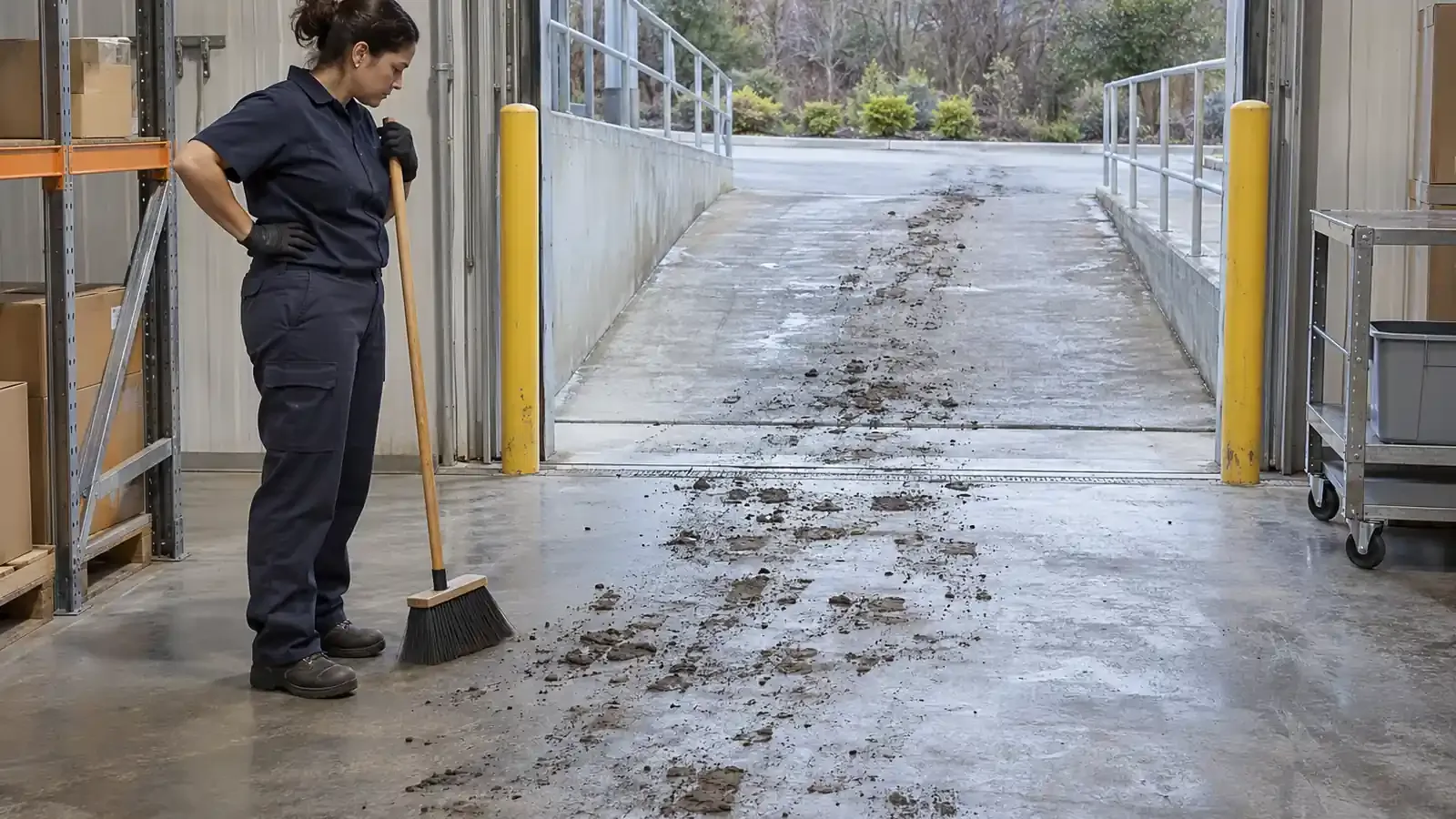
When a receiving floor is cleaned and the same dirt trail returns, the floor may be showing you where the problem ends, not where it begins. Truck tires, pallet wheels, footwear, and routine movement can carry loose soil or residue across an exterior apron, through a dock or entrance, and into the warehouse.
Warehouse pressure washing can interrupt that transfer path when washable exterior buildup is feeding it. The useful first step is not choosing the strongest cleaning method. It is following the dirt backward, identifying what is moving, and defining which exterior surfaces actually belong in the work.
Follow the Dirt Backward Before Defining the Job
A repeating trail provides more useful information than a general complaint that the warehouse gets dirty. Walk the route in reverse, starting where the interior soil is most visible and ending at the first exterior area that holds similar material.
Check the path in this order:
- Note whether the interior trail follows people, forklifts, pallet jacks, carts, or delivery traffic.
- Inspect the threshold, entrance mat, dock plate area, and door track for the same color and texture.
- Continue across the exterior dock apron, ramp, sidewalk, or approach lane.
- Look for an active source such as loose sediment, mud, recurring vehicle drips, damaged pavement, poor drainage, or dirty mobile equipment.
This does not prove that every interior mark came from outside. It gives the facility team a testable working path. If the trail stops at an exterior buildup zone, loading dock cleaning may reduce the material available to be carried indoors. If it begins at an indoor spill point, leaking machine, damaged seal, or production area, exterior washing is not the primary fix.
Match the Exterior Source to the Actual Cleaning Scope
“Wash the warehouse” is too broad to define useful work. Horizontal travel surfaces, building walls, oily concrete, and mobile equipment can sit beside one another while requiring different cleaning decisions.
Loose Grit, Mud, and Compacted Traffic Soil
Dry pickup or sweeping should remove loose material before wet work begins. Pressure washing may then help clean suitable exterior concrete at dock aprons, ramps, personnel entrances, and connecting pavement. The scope should name those transition surfaces instead of stopping at the most visible patch.
Adjacent driving and parking surfaces may fit our parking lot and garage cleaning service, but they should be included only when they contribute to the same transfer route.
Oil and Grease Need a Separate Decision
Dark residue near truck positions or hydraulic equipment should not automatically be treated as ordinary dirt. The facility first needs to identify the material and stop an active leak or spill. Industrial degreasing services may be relevant to compatible surfaces when oily residue is confirmed, but the product, surface, collection plan, and expected result all matter. Old stains in porous concrete may improve without disappearing completely.
Maryland guidance for pavement and building washdown calls for dry cleanup of oil, grease, or other pollutants before washing and for controls on mobilized solids and washwater. That is why the drain route and disposal plan belong in the scope before a degreaser is applied.
Walls and Equipment Are Adjacent, Not Automatically Included
Commercial building pressure washing or another material-appropriate method addresses exterior walls, overhead-door surrounds, and entrance elevations. It is a different scope from cleaning the horizontal route that carries dirt inside. When wall buildup is part of the problem, our commercial building washing service is the more relevant service category.
Heavy equipment pressure washing is separate again. Washing a dock apron does not mean forklifts, yard trucks, trailers, controls, or machinery are included. Equipment compatibility, electrical and hydraulic components, wash location, and runoff need their own review.
Exterior Cleaning Works Best With Source Controls
Pressure washing removes accessible buildup. It does not repair drainage, replace worn mats, stop a fluid leak, correct a broken door seal, stabilize a muddy yard, or clean the interior floor after exterior work is complete.
Pair the exterior cleaning scope with the controls that keep the route from reloading:
- Maintain entrance mats or scraper systems that suit the traffic using them.
- Address leaks, spills, and damaged pavement instead of repeatedly washing their symptoms.
- Keep loose debris on a dry-cleaning schedule between deeper cleanings.
- Confirm that drains and low areas are working as intended.
- Continue interior floor care after the upstream exterior source has been reduced.
OSHA’s walking-working surface rule requires workplace surfaces to be kept clean, orderly, sanitary, and as dry as feasible. Exterior pressure washing can support housekeeping, but it does not by itself make a dock safe or compliant. Inspection, traffic controls, spill procedures, drainage, and repairs remain facility responsibilities.
Plan the Work Around an Active Warehouse
A cleaning plan should explain how wet work will coexist with deliveries, pedestrians, forklifts, and open dock edges. Assign dock positions or entrances to specific work windows, identify who controls access, protect or manage drains as the site requires, and allow the area to reach an appropriate condition before reopening it to traffic.
The plan should also state what remains operational. One entrance may need to stay open while another is cleaned. A dock position may need to close without blocking the entire receiving schedule. Interior teams should know when to clean the threshold and first section of floor so fresh exterior work is not followed by old dirt being carried back across it.
Avoid using a fixed calendar as the only trigger. A high-traffic dock during wet weather may load up faster than a protected entrance with light use. Condition, traffic, spills, and the speed at which the trail returns give a facility better scheduling evidence than a universal monthly or quarterly rule.
Recheck the Same Route After Normal Traffic Returns
The best test happens after the warehouse resumes normal work. Inspect the same interior trail, threshold, apron, and approach. If the amount of tracked material drops, the exterior source was likely an important part of the problem. If it returns quickly, look for the point where the path becomes dirty again.
That follow-up keeps warehouse pressure washing tied to an observable result. The goal is not simply a brighter apron. It is a cleaner transfer route, a clearer maintenance scope, and fewer opportunities for exterior buildup to keep moving indoors.
Frequently Asked Questions
Can exterior pressure washing stop all dirt from entering a warehouse?
No. It can reduce washable buildup on exterior source surfaces, but mats, seals, drainage, yard conditions, active spills, equipment, and interior processes may also contribute. Trace the route and correct each active source.
Which dock and entrance surfaces should be included?
Inspect the exterior apron, ramp, pedestrian approach, threshold, dock plate area, door tracks, and connecting pavement. Include a surface only when it contributes to the same dirt path and can be cleaned with a method suitable for its material and condition.
Is industrial degreasing needed for every loading dock?
No. Loose soil and ordinary traffic grime do not automatically require degreaser. Confirm oily residue first, identify the surface, review the product label and safety data, and establish how the resulting washwater will be controlled.
Can loading dock washwater go into a storm drain?
Do not assume it can. The answer depends on the contaminants, cleaning products, drain connection, facility permits, and applicable Maryland and local requirements. Identify the drainage route and approved collection or disposal method before washing.
Can heavy equipment be cleaned during the same project?
Only if equipment cleaning is separately assessed and written into the scope. Mobile equipment introduces different surfaces, components, soils, access needs, and washwater concerns. Dock cleaning alone does not include it.
How can cleaning be scheduled without stopping every delivery?
Use a dock-by-dock or entrance-by-entrance plan. Operations can assign delivery windows to the positions that remain available while the cleaning team isolates the active work area. The facility and cleaning team should agree on access control and reopening responsibility before work begins.
What should the facility check if the dirt trail returns quickly?
Follow the trail backward again. Look for an untreated approach lane, saturated or damaged mat, recurring spill, leaking vehicle or machine, muddy yard route, broken seal, poor drainage, or interior source that the first scope did not address.
